
Get Healthy!
- Posted January 23, 2026
Smartwatches Help Detect Hidden Dangerous Heart Rhythm Problems, Clinical Trial Finds
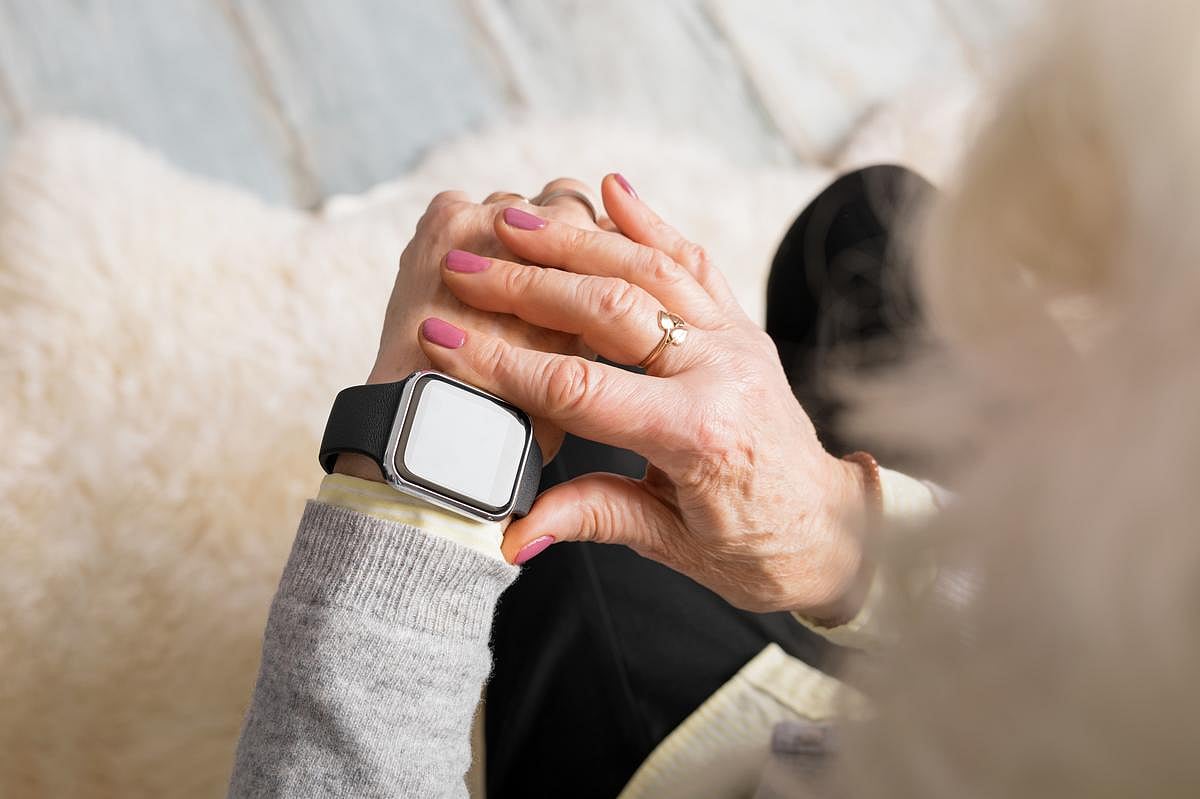
Smartwatches can greatly improve doctors’ ability to detect hidden-but-dangerous heart rhythm problems, a new clinical trial has found.
Doctors detected heart arrhythmia four times more often in patients who wore an Apple Watch, researchers reported Jan. 22 in the Journal of the American College of Cardiology.
More than half the time, these smartwatch wearers with heart rhythm problems hadn’t shown any symptoms prior to diagnosis, researchers found.
Later editions of Apple Watches are equipped with two functions that can help monitor heart health — photoplethysmography (PPG), which tracks heart rate, and a single-lead electrocardiogram (ECG) that monitors heart rhythm.
"Using smartwatches with PPG and ECG functions aids doctors in diagnosing individuals unaware of their arrhythmia, thereby expediting the diagnostic process,” said senior researcher Dr. Michiel Winter, a cardiologist at Amsterdam University Medical Center in The Netherlands.
“Our findings suggest a potential reduction in the risk of stroke, benefiting both patients and the health care system by reducing costs,” Winter said in a news release.
The most common heart rhythm problem is atrial fibrillation, which causes an unnatural quivering beat in the upper chambers of the heart, researchers said in background notes.
A-Fib allows blood to pool and clot in the heart, increasing a person’s risk of stroke fivefold, according to the American Heart Association.
“If you look at the inside of the atrium, they're not nice smooth balloons — there are these ridges and pouches that hang off of them,” said Dr. Laurence Epstein, system director of electrophysiology for Northwell Health in Manhasset, New York.
“If you have this pouch that's no longer squeezing and ejecting the blood out and just quivering, blood can pool in it, and blood clots can form that fly off and cause a stroke,” said Epstein, who reviewed the findings.
However, about half of A-Fib cases are intermittent and without symptoms, making the condition tough to detect and diagnose, researchers said.
"Often, people show up in their doctor's office and get an EKG,” Epstein said. “Obviously, you're looking at a three-second snapshot of their life for something that could be happening intermittently or even very rarely.”
Smartwatches are much easier than other wearable devices for detecting irregular heart rhythms, Epstein noted. These other means require people to wear sticky leads, carry around bulky monitors or even receive short-term implants.
Lead researcher Nicole van Steijn, a doctoral candidate at Amsterdam UMC, noted that wearables that track both the pulse and electrical activity have been around for a while.
"However, how well this technology works for the screening of patients at elevated risk for atrial fibrillation had not yet been investigated in a real-world setting,” she said in a news release.
For this new study, researchers provided 219 people 65 and older with an Apple Watch, while 218 others received standard care. All the seniors had a high risk for stroke.
The participants were monitored for six months, with smartwatch users wearing their device for 12 hours a day.
After six months, researchers had diagnosed heart arrythmia in 21 patients in the Apple Watch group, of whom more than half (57%) showed no symptoms.
In the standard care group, doctors only detected five cases of heart arrythmia. All five people experienced symptoms that contributed to their diagnosis.
“Here in a selected population, the use of a smartwatch did demonstrate a benefit in identifying atrial fibrillation that would normally not have been identified in typical ways,” Northwell’s Epstein said.
Overall, the study shows the possibilities of using devices like smartwatches to help detect health problems with symptoms that come and go, he said.
Folks diagnosed with atrial fibrillation can be prescribed blood thinners to lower their risk of stroke, Epstein said.
“Up to 50% of those people aren't anticoagulated,” he added.
“Anything we can do to monitor patients for the risk factors that increase their likelihood to develop atrial fibrillation, heart failure, coronary disease, all those things, the better chance we're going to have to prevent some of the long-term consequences,” Epstein explained.
More information
The American Heart Association has more on atrial fibrillation.
SOURCE: Amsterdam University Medical Center, news release, Jan. 22, 2026


